

The Evolution of the Cinema Seat
The Evolution of the Cinema Seat: How Design and Comfort Have Transformed the Movie Experience
A great cinema experience is built on more than image and sound. It begins with something much simpler — the seat. The cinema seat has quietly evolved alongside film itself, transforming from a utilitarian object into an essential part of the storytelling environment.
From the earliest theaters of the twentieth century to today’s luxurious recliner-filled auditoriums, the design of cinema seating has always reflected the cultural values and technological ambitions of its time.
The Early Years: Function over Form
In the early decades of cinema, comfort was a secondary concern. Seats were made of wood or metal, designed for capacity rather than experience. Theaters prioritized the number of people they could fit over how those people felt.
Yet even then, the seeds of design evolution were planted. As cinema became more than entertainment — a social ritual, a shared escape — the environment had to evolve. Viewers wanted to be comfortable enough to lose themselves in the story.
The Rise of Upholstered Comfort
By the mid-twentieth century, cinemas began to understand that comfort was part of the experience. Upholstered chairs, padded armrests, and soft fabrics replaced bare materials. Audiences stayed longer, returned more often, and associated the theater with luxury.
This shift marked the birth of the modern cinema seat industry, where ergonomics, material science, and aesthetics began to merge. Seating manufacturers started treating each chair not just as a product but as a piece of architecture within the theater.
The Recliner Revolution
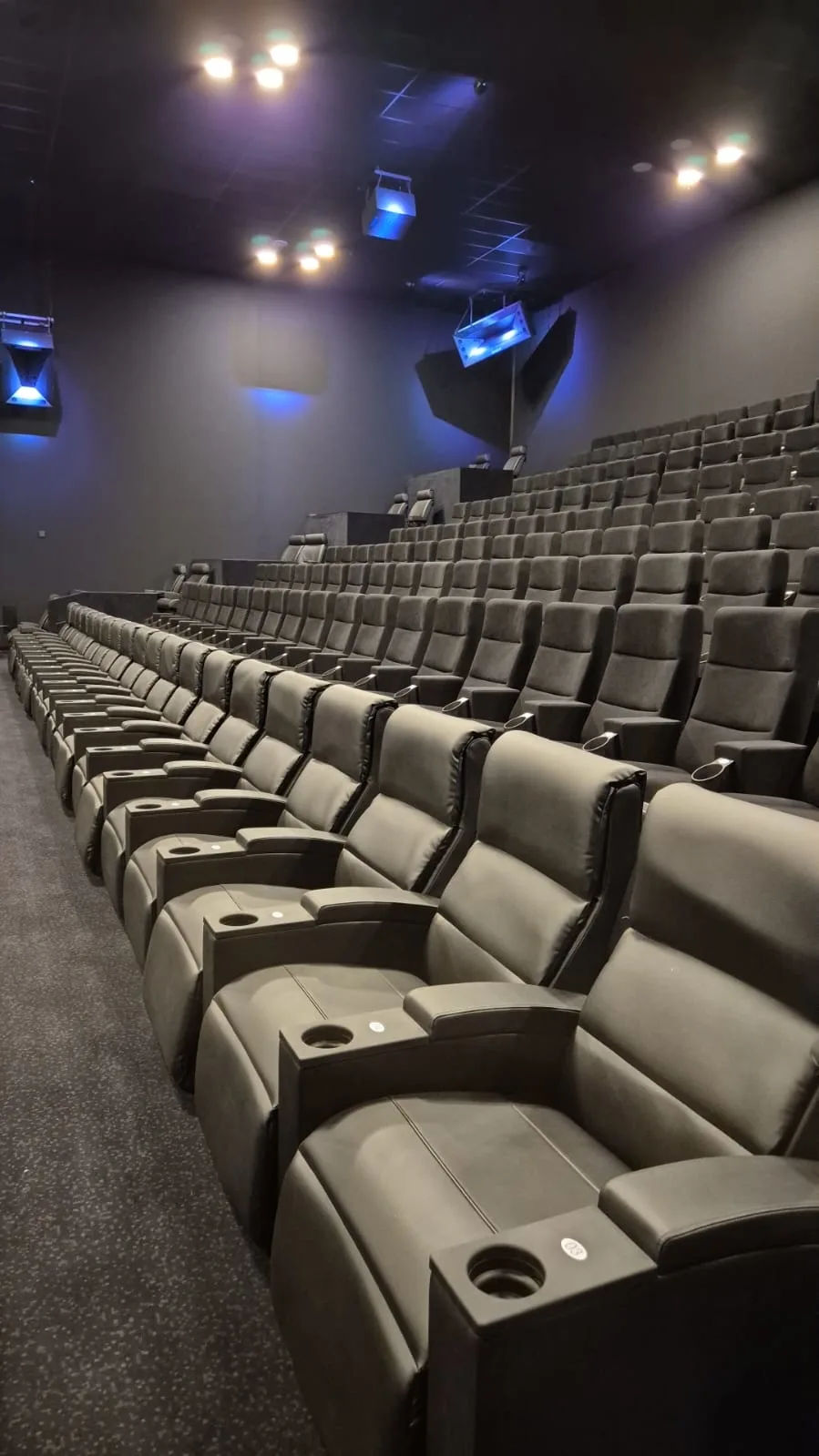
In recent decades, the most dramatic transformation came with the introduction of recliner cinema seats. What began as a premium option quickly became the global standard for comfort and exclusivity.
Electric reclining mechanisms, extended legroom, and integrated accessories such as cup holders, USB ports, and ambient lighting turned cinema seating into an experience in itself.
Recliners did more than upgrade comfort — they reshaped the business model of theaters. Fewer seats per hall, but higher satisfaction per visitor, created a new balance between luxury and profitability.
Design as an Emotional Tool
In modern cinema architecture, design is psychological. The angle of a backrest, the texture of a fabric, or even the space between rows can influence emotion.
Turkish and European manufacturers have mastered this subtle art, crafting cinema seats that blend ergonomics with aesthetic storytelling. Every contour is designed to support both the body and the mind, allowing the audience to sink into stillness while their imagination comes alive.
Colors play a critical role too. Deep reds evoke tradition and passion, while cooler tones like gray and navy suggest modernity and focus. The design choices go far beyond style — they shape how people feel in the space.
The Science of Ergonomics
The evolution of the cinema seat has always followed human anatomy. Modern ergonomic studies show that long sitting durations require dynamic support — pressure distribution, lumbar balance, and subtle flexibility in movement.
Manufacturers in Turkey and across Europe now use advanced 3D modeling and pressure mapping to create seating that adapts naturally to the human form. High-density foams, durable fabrics, and precision engineering ensure consistent comfort for thousands of screenings.
This is where design meets science — a perfect equilibrium between engineering accuracy and human empathy.
Sustainability and Longevity
The next stage in cinema seating evolution is responsibility. Theaters around the world are now demanding sustainable seating solutions that combine durability with environmental awareness.
Manufacturers are responding by using recyclable materials, energy-efficient production systems, and water-based coatings. Long-lasting materials reduce waste, while modular designs allow for easy maintenance and part replacement.
Sustainability is no longer just an ethical choice. It is a business advantage that defines the modern global supplier.
Customization and Brand Identity
Cinema seats have also become a branding tool. The design of a seat can express a theater’s personality — minimalist for art houses, luxurious for VIP lounges, or vibrant for family cinemas.
Customization allows operators to define their space visually. Turkish manufacturers offer options for color, fabric texture, stitching, and even integrated lighting to reflect each client’s aesthetic. This flexibility transforms cinema seating from a product into an identity.
Short Lead Times and Global Reach
Another critical part of evolution is efficiency. Today’s entertainment industry moves fast, and theaters require reliable partners who can deliver quickly.
Turkey’s unique geographic position between Europe and Asia gives it a logistical edge. Combined with advanced production capabilities, this enables short lead times and consistent export performance — an essential factor in large-scale theater development.
The Future: Intelligent Seating
The next generation of cinema seating will not only support the body but also respond to it. Future seats will feature adaptive comfort, integrated heating or cooling systems, and possibly motion synchronization with the film.
As smart technology advances, intelligent cinema seats will bridge the gap between the physical and digital experience. Imagine a theater where every seat becomes a personal comfort zone, tuned perfectly to each viewer’s preferences.
From Utility to Experience
The cinema seat has come a long way — from a hard bench in a dark hall to a precision-crafted instrument of comfort and design. Its journey mirrors that of cinema itself: evolving from a mechanical spectacle to a deeply emotional art form.
Across Europe, the Middle East, and beyond, seating manufacturers are continuing this legacy, creating products that embody innovation, craftsmanship, and emotion.
Because in the end, the true success of a cinema is not measured only by what happens on the screen, but by how the audience feels while watching. And that story always begins with the seat.
Created By : Monseat